
 Inggris
 中文简体
中文简体 Русский
 Español
 Português
 Türkçe
 العربية
 Deutsch
 Polski
 Italiano
 Français
 한국어
한국어 ไทย
ไทย Tiếng Việt
 日本語
日本語
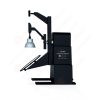

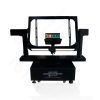













Alat Pembengkokan untuk Saluran Non-Logam dan Komposit
Pengguna manual
berlaku LISUN Model: LS-B52
1. Pemahaman Dasar tentang Peralatan
1.1 Parameter Utama
| Parameter Teknis | Note |
| Nominal Diameter of the Sample Conduit | 16, 20, 25 mm |
| Radius at the bottom of the mold cavity | 48, 60, 75 mm |
| The radius of the arc described by the center of a curved roller | 84105, 131.25 mm |
| Groove Radius of Forming Dies and Bending Rolls | 8.1, 10.1, 12.6 mm |
| Diameter at the bottom of the bending roller | 24, 30, 37.5 mm |
This device is designed for specialized testing of the mechanical properties of non-metallic cable conduits.
It is primarily used in electrical product testing laboratories, quality control departments at cable and conduit manufacturers, third-party testing organizations, and for import and export product inspections.
1.2 Standar yang Berlaku
Strictly in accordance with GB/T 20041.21-2017 “Conduit Systems for Cable Management—Part 21: Special Requirements for Rigid Conduit Systems,” and Figure 10.4.102 (corresponding to Clause 10.4.102 and Figure 103 of IEC 61386-21:2021), and subjected to testing.
1.3 Mengunduh Dokumen Elektronik
Kami telah mengirimkan tautan unduhan untuk manual pengguna elektronik, sertifikat kalibrasi, kartu garansi, dan dokumen lainnya melalui email pada saat pengiriman. Mohon segera unduh. Jika Anda belum menerima email tersebut, silakan hubungi kami untuk meminta tautan unduhan lagi.
2. Tindakan Pencegahan untuk Penggunaan
2.1 Persyaratan Keselamatan Lingkungan Operasi
Suhu lingkungan pengoperasian: 15°C hingga 35°C; kelembapan relatif: 45% hingga 75%; tidak ada kondensasi, tidak ada gas korosif, dan tidak ada debu di udara.
Letakkan perangkat di atas meja kerja yang rata dan stabil dengan jarak minimal 30 cm di semua sisi, jauh dari sumber getaran.
2.2 Pedoman Keselamatan untuk Prosedur Operasional
During testing, do not reach into the test area with your hands or any other part of your body to prevent crush injuries.
The test specimen must be securely mounted to prevent it from falling or ejection during loading, which could pose a safety hazard.
3. Pendahuluan tentang Pengaturan Pengujian
3.1 Diagram Standar
Lihat Gambar 3-1 (diambil dari standar IEC).
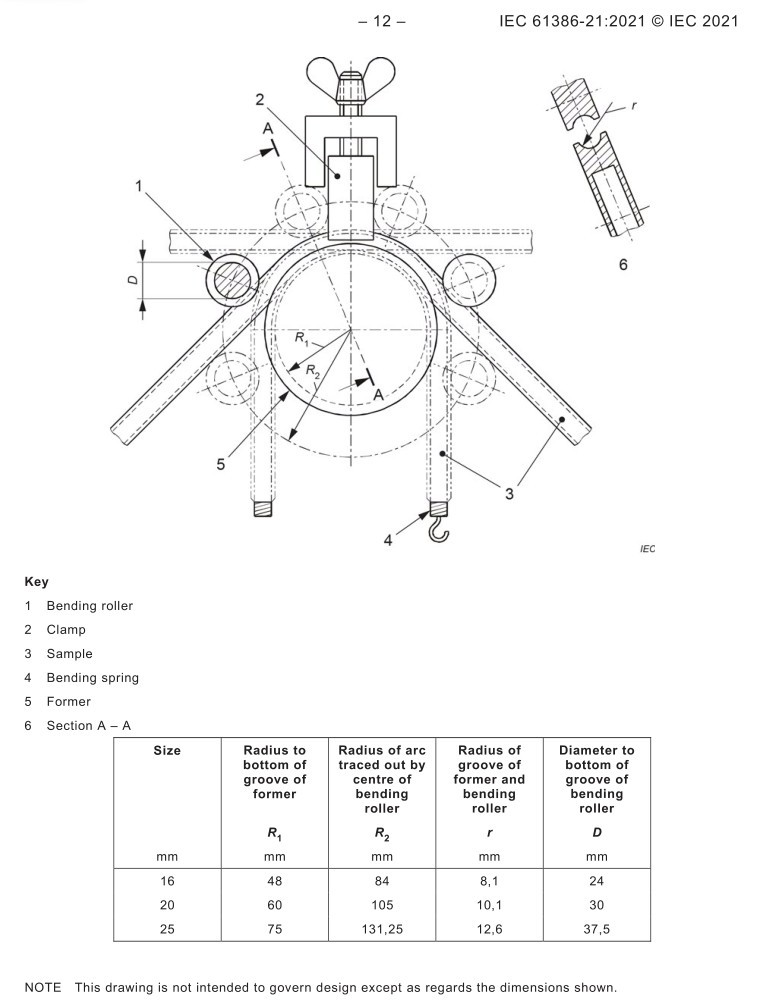
Gambar-3 1
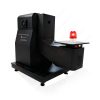
3.2 Foto Produk
Lihat Gambar 3-2.
| Jumlah | Note |
| ①②③ | Specimen mounting holes, available in 16, 20, and 25 mm sizes |
| ④⑤⑥ | Molding Die |
| ⑦⑧⑨ | Curved Rollers |
| ⑩ | Curved roller handle: Pull the handle down to bend the installed tubing. |
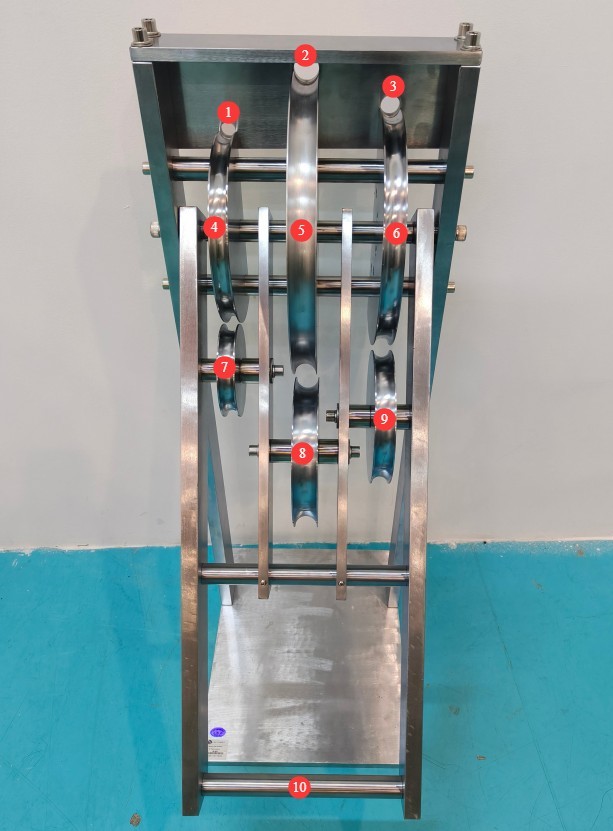
Gambar-3 2
4. Catheter Bending Test
4.1 Perlakuan Awal Sampel
The length of the test specimen is approximately 500 mm; tests using specimens of other dimensions should be conducted in accordance with the manufacturer’s instructions.
Before the bending test, the bending aid shall be inserted into each test specimen. The bending aid shall consist of a spring formed by coiling a square-section metal wire; the spring shall be free of burrs, and its outer diameter shall be 0.7 mm to 1.0 mm smaller than the specified minimum inner diameter of the catheter; alternatively, a bending aid recommended by the manufacturer may be used.
Before the test, place the specimen, which has been fitted with the bending aid, in a freezer for at least 2 hours. The temperature of the freezer should be maintained at the values shown in the table below (with a tolerance of ±2 °C).
| Catheter Classification | Transportation, installation, and operating temperatures must not be lower than (unit: °C) |
| 1 | +5 |
| 2 | -5 |
| 3 | -15 |
| 4 | -25 |
| 5 | -45 |
4.2 Eksekusi Tes
The bending apparatus should be placed next to the freezer, and the test should be conducted within 12 seconds of removing the specimen from the freezer.
First, lift the bending roller handle so that the test specimen passes through the mounting hole and is placed in the groove of the forming die; simultaneously, gently clamp it with the clamping device. Next, gently press down on the bending roller handle and move the bending roller around the forming die. Upon releasing the bending roller, the specimen should be bent to (90±5)°. At the same time, the bending aid should be removable without damaging the specimen or the bending aid itself.
4.3 Evaluasi Hasil Tes
After testing, the specimen must not exhibit any cracks visible to the naked eye or with corrected vision without additional magnification; furthermore, it must allow the corresponding gauge shown in Figure 4-1 (taken from the IEC standard) to pass through the tube under its own weight without any initial velocity.
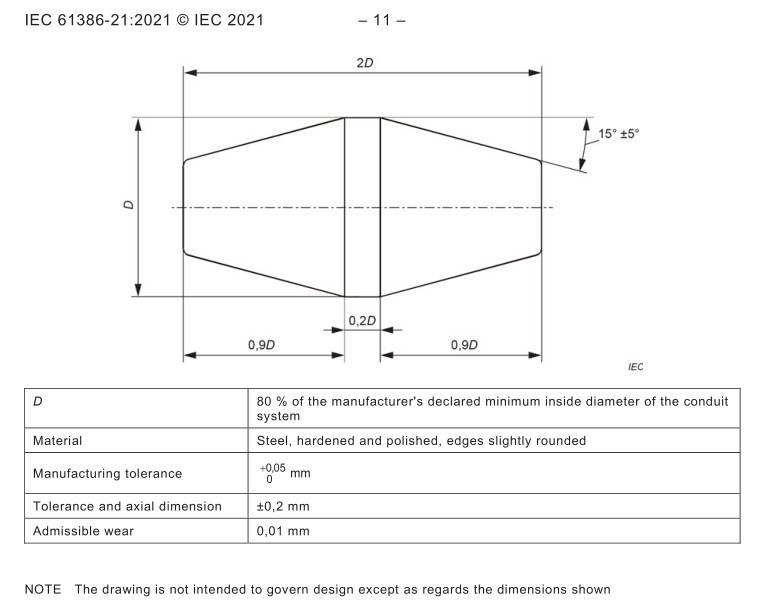
Gambar-4 1
5. Prosedur Pasca-Ujian
5.1 Reset Perangkat
Outside of testing hours, do not install test specimens in the testing equipment to prevent the application of force when testing is not in progress.
5.2 Persiapan Sampel
Pisahkan sampel yang lulus dan gagal dalam pengujian, beri label dengan jelas, dan hindari kebingungan.
5.3 Membersihkan dan Merapikan Lokasi Pengujian
Wipe dust and debris from the surface of the device with a lint-free, soft cloth; do not rinse the equipment directly with water.
Organize the tools on the workbench, arrange them neatly, and clean up any debris generated during the experiment.
6. Perawatan dan Pemeliharaan Rutin
6.1 Pemeliharaan Reguler
Every three months, apply a small amount of neutral grease to the bending roller shaft to prevent rust and seizing; apply rust-preventive oil to the forming die and bending rollers to prevent rust.
6.2 Penyimpanan dan Pemeliharaan Jangka Panjang
After completing routine maintenance, cover the entire unit with a dust cover and store it in a dry, well-ventilated warehouse.
6.3 Persyaratan Interval Kalibrasi
Untuk memastikan keakuratan dan keandalan perangkat, disarankan agar perangkat tersebut secara berkala dikirim ke laboratorium metrologi pihak ketiga yang berkualifikasi untuk kalibrasi. Interval kalibrasi yang disarankan adalah 12 bulan. Pengguna dapat menentukan interval kalibrasi spesifik berdasarkan frekuensi penggunaan, kondisi lingkungan, dan persyaratan sistem mutu.
7. Pemecahan Masalah dan Penyelesaian Masalah Umum
| Gejala Kesalahan | Kemungkinan penyebab | Prosedur |
| Jamming of the Curved Roller | Dust buildup, insufficient lubrication, foreign objects lodged in the mechanism | Coba lagi setelah membersihkan debu, menambahkan pelumas, dan membersihkan benda asing dari celah-celah. |